 StoryCodex
Read Multi-Volume Series Without Falling Behind
Organize multi-volume web novels and book series with a shared story codex, grouped volumes, an offline backlog, and a portable library.
 ForgeAppsUpdated September 19, 20266 min read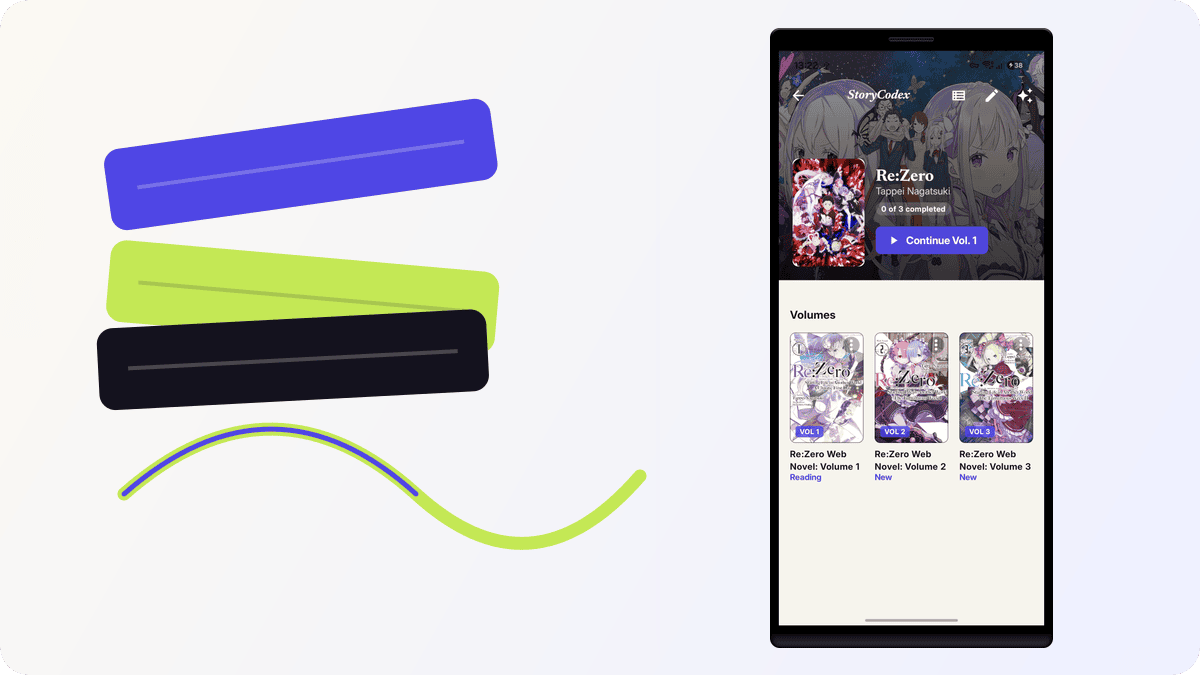
Huge series are not hard because they are long. They are hard because the pieces do not cooperate: each volume arrives as a separate file or a separate listing, progress does not carry over, and returning after a break means losing the thread. The fix is organizational, not motivational. StoryCodex treats a multi-volume work as one story, and that changes the workflow from a fight into a routine.
The series pipeline
Five habits that keep a long series under control
- 1
Group volumes into one series
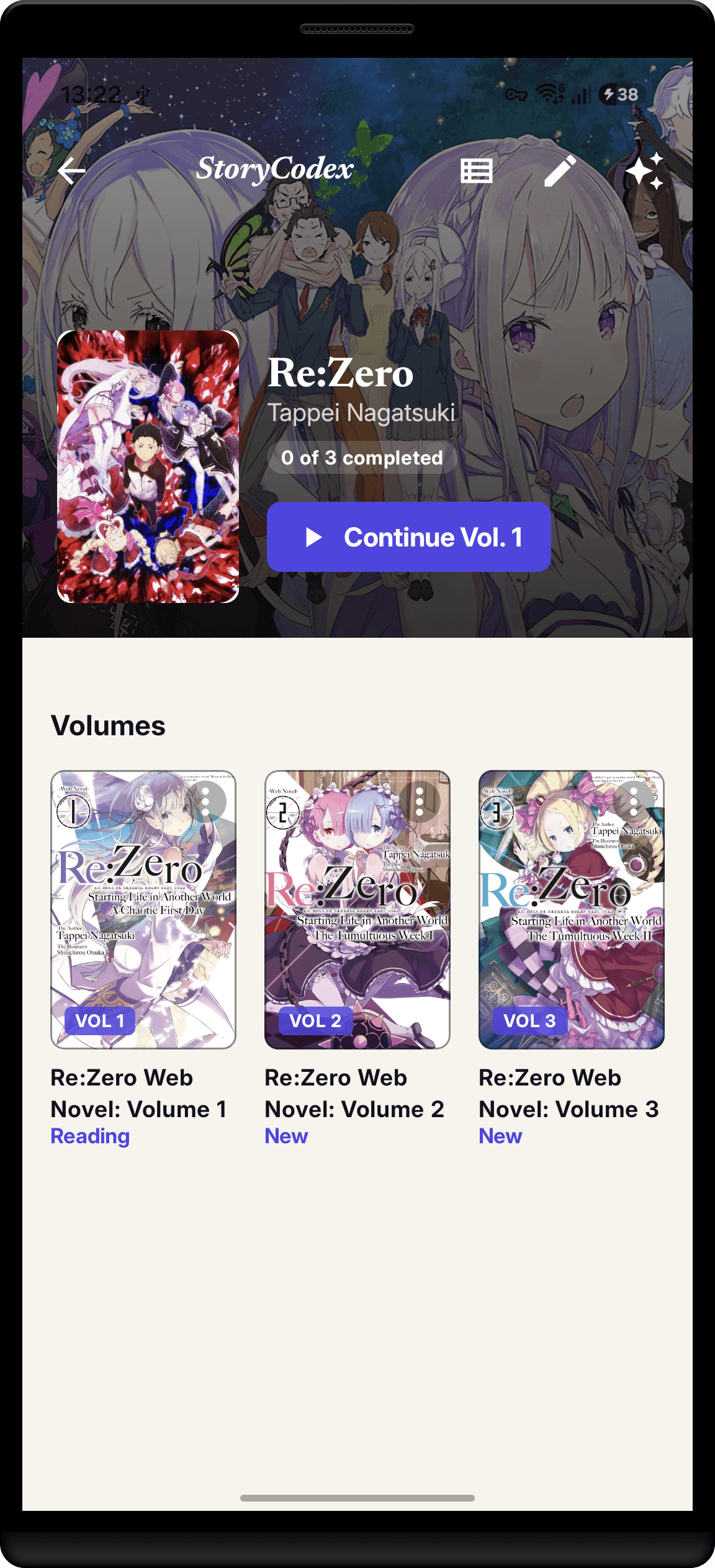
Whether the volumes arrive as separate web listings or EPUB files, import them and add them to a series from the book details screen. Reorder volumes, pick cover art, or remove one without deleting the rest.
- 2
Let the Codex span the whole series
A series shares a single Story Codex, so character profiles, aliases, relationships, and the timeline accumulate across volumes instead of resetting at every new book.
- 3
Save the backlog offline
Multi-select a whole batch of chapters and save them in one pass. Offline chapters behave exactly like online ones, Codex marks included, so a flight or a dead zone is reading time, not a forced break.
- 4
Analyze in the background
Select the chapters you have not gotten to and run a bulk analysis. They are downloaded, summarized, and folded into the Codex in the background, with a progress report when the batch finishes.
- 5
Bookmark and carry everything with you
One tap from the player or chapter menu saves a bookmark with a jump link. Portable transfer packs the library, Codex, bookmarks, and progress into one file for any device, and Google Drive backup keeps it current.
How the shared Codex actually works
Under the hood, a series has one primary volume that owns the Codex; every other volume links to it as a secondary. That single detail explains most of the behavior you will see. Characters the protagonist met in volume one keep the same profile when they reappear in volume four, so a name introduced as 'Lena' and later spoken as 'Lady Marshal Voss' still resolves to one person. The timeline runs unbroken across volumes. And because the primary owns the data, StoryCodex warns you before deleting a primary volume that still has linked volumes attached, rather than silently orphaning the Codex the rest of the series depends on.
Volume order is worth a moment of care. Each volume carries a number shown as a 'Vol. N' tag on the book details screen, and the number must be unique inside the series, so two books cannot both claim to be volume two. Set the order to story order, not file order: an omnibus EPUB that bundles books three and four should sit after the volume that ends book two, and a prequel you imported last still belongs at the front. 'Continue reading' on the Home screen trusts this too, since a series continues from whichever volume you touched most recently.
A typical session, end to end
Put it together and a real session looks like this. The weekly goal holds the habit and the reminder brings you in. You read on the commute using chapters saved offline the night before. A chapter gets dense, so you tap Chapter Summary to anchor yourself. Volume twelve opens with a callback to volume three, and the shared Codex makes it land with its full weight. On Sunday, the reading stats show the week's chart, and the story insights remind you which characters carried it.
After a long break, the same pipeline handles the return: bulk-analyze the missed chapters, skim the 'Previously On' recap, and resume where you stopped instead of where you gave up. The volumes being separate files stops mattering, because the series container is what you actually read.
Mixed sources work the same way. A series might start as a web serial you imported by URL, continue as an author's official EPUB, and end as a downloaded PDF of the final volume. Inside a series container they behave as one book: progress flows forward, the Codex keeps a single cast, and the offline backlog covers whichever volumes you saved. You stop managing files and start managing a story.
Managing the backlog without drowning in it
The backlog question deserves its own note. Ongoing serials grow while you read them, so 'saved offline' is a moving target. The practical rhythm is to keep one volume ahead: when you open the second-to-last saved stretch, queue the next batch for download and analysis. That way the series never runs dry mid-arc, and the Codex is always summarized up to the newest chapter by the time you reach it.
For finished series the problem flips: the whole backlog already exists and the temptation is to analyze all fifteen volumes on day one. Resist it. Bulk analysis is ordered work, and the Codex reflects the furthest chapter it has processed, so analyze the volume you are reading and the next one, not the finale. The spoiler boundary that protects you mid-chapter works the same way across volumes: it follows your reading position, not your download folder.
Multi-volume questions
Does merging volumes into a series move or copy my files?
Neither. Linking a volume to a series only points it at the primary volume's Codex and gives it a volume number. Your books, bookmarks, and progress stay where they are, and you can unlink a volume without deleting anything.
Can a series mix web serials and EPUB files?
Yes. A series can hold a web listing, an author's EPUB, and a PDF side by side. Each volume keeps its own source and offline chapters, while the Codex, cast, and timeline stay shared.
What happens to the Codex if I remove the first volume?
StoryCodex blocks deleting a primary volume that still has linked volumes attached and tells you how many depend on it, so the shared story data cannot be orphaned by accident. Unlink or remove the other volumes first.
How many volumes can one series hold?
Volume order accepts numbers up to 50, which covers even the longest light novel runs. Each volume needs its own order number, so plan gaps if you expect omnibus or side-story volumes later.
Pro tips from long-series readers
Keep volumes in one series
A shared Codex is the difference between reading a series and juggling fifteen strangers. Split volumes only when the author truly wrote a separate story.
Download before you travel
Offline chapters read, summarize, and narrate exactly like online ones. Save a volume ahead so bad Wi-Fi never decides your reading schedule.
Summarize the last chapter before pausing
Future you needs a landing strip. The next recap builds on it when you return, even months later.
Treat the catch-up as a pipeline job
150 unread chapters are a batch task, not a weekend project. Queue the analysis and let the background run do it.
That is the whole point: for long series, context is the feature. The files and volumes are plumbing. StoryCodex keeps the context, so you can keep reading.
StoryCodex is free to try on Google Play and the App Store. Import a serial, pick a neural voice, and your library works fully offline, no account required.
Keep the story clear
Try StoryCodex for free.
Read, listen, and remember any long story with a private, spoiler-safe story memory that lives on your device.

